
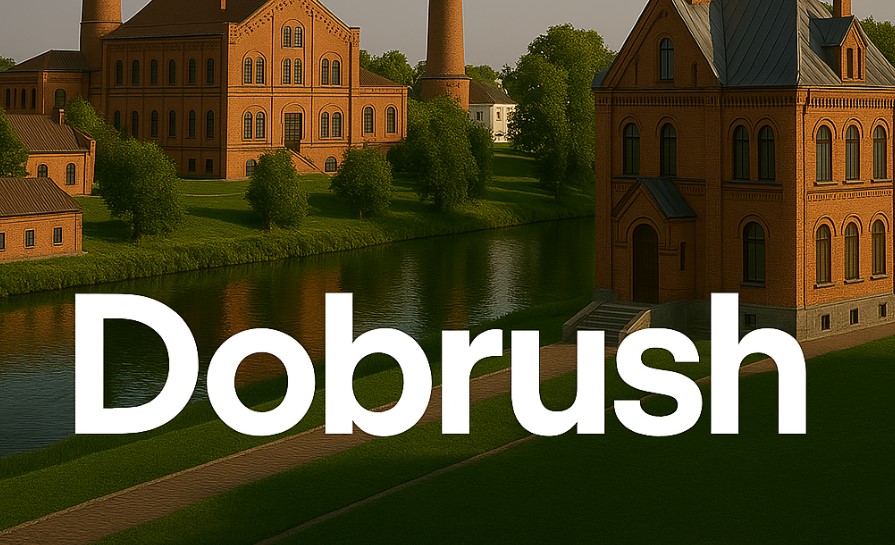
Tucked into the southeastern corner of Belarus, near the Russian border, Dobrush is a town that whispers rather than shouts. With a population just under 18,000, it may not appear on most travel itineraries—but for those who venture off the beaten path, Dobrush offers a compelling blend of industrial heritage, cultural resilience, and understated beauty.
A Town with Deep Roots
First mentioned in chronicles in 1335, Dobrush has seen centuries of shifting borders, empires, and ideologies. It was once part of the Grand Duchy of Lithuania, later absorbed into the Russian Empire, and eventually became a Soviet industrial hub. Its location on the Iput River made it a natural site for trade and manufacturing, and by the 19th century, it had become synonymous with one thing: paper.
The Dobrush Paper Factory, founded in 1870, remains the town’s economic and symbolic heart. Once one of the largest in the Russian Empire, it still operates today, producing high-quality paper products and anchoring the town’s identity. The factory’s legacy is visible not just in its smokestacks, but in the elegant House of the Factory Director, a neo-Gothic residence that now serves as a historical landmark.
Echoes of the Past
Dobrush carries the weight of history with quiet dignity. During World War II, the town suffered under Nazi occupation, and its Jewish community was decimated in mass executions in 1941 and 1942. Today, memorials and local museums preserve these memories with solemn care.
The Dobrush Regional Museum of Local Lore offers a thoughtful introduction to the town’s layered past—from archaeological finds to wartime artifacts and folk traditions. It’s a small but meaningful stop for those seeking context and connection.
What to See and Do
- Dobrush Wooden Architecture Museum: This open-air museum is a hidden gem, showcasing traditional Belarusian wooden homes, farm buildings, and religious structures. It’s a celebration of craftsmanship and rural heritage, set against a backdrop of forested calm.
- Voskhod Cinema: Yes, Dobrush has its own 3D cinema—proof that even small towns can embrace modern entertainment while preserving their charm.
- Cultural Events: Dobrush has hosted national festivals, including the Day of Belarusian Writing, which brought writers, artists, and performers from across the country. The town’s Palace of Culture and public library remain active hubs for community life.
The Feel of the Place
Dobrush is not a tourist town—and that’s precisely its appeal. It’s a place where life moves at a gentler pace, where locals greet each other by name, and where the scent of pine mingles with the faint trace of paper pulp. The streets are clean, the people reserved but welcoming, and the atmosphere is one of quiet pride.
For travelers seeking authenticity over spectacle, Dobrush offers a rare kind of travel experience: one rooted in real life, not curated fantasy.
Did You Know?
- 🏭 Paper Legacy: The Dobrush Paper Factory once supplied fine writing paper to the imperial court of Tsar Alexander II.
- 📚 Literary Threads: The town hosted the Day of Belarusian Writing in 2018, turning its streets into stages for poetry readings, folk performances, and book fairs.
- 🕍 Architectural Oddity: The House of the Factory Director stands out as one of the few neo-Gothic buildings in a region dominated by Soviet architecture—a touch of Victorian England in the Belarusian steppe.
- 🎥 A Cinematic First: Dobrush was among the first small Belarusian towns to operate a modern 3D cinema outside a regional capital.
- 🌲 Symbol of Growth: The town’s name is believed to derive from the Slavic word dobro, meaning “good” or “kind”—a fitting nod to its enduring spirit.