
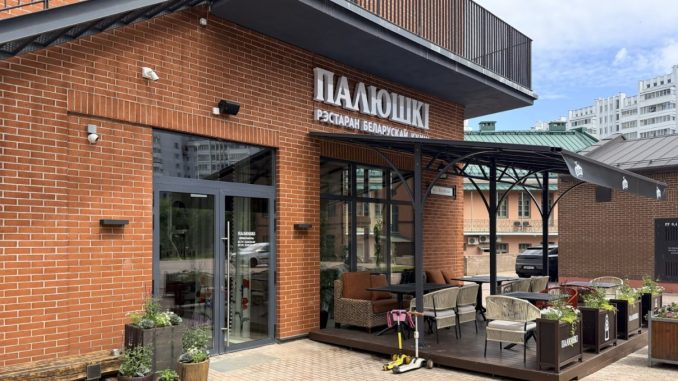
Tucked into a restored nook on Vitebskaya Street, the new Palyushki restaurant brings the soul of the Turov region to Minsk, cooking entirely from the cherished family recipes of Alena Bronislavovna. I tested the cheapest dish, the priciest plate, and everything in between to see if this fairy-tale-style spot earns a place at the top table of Belarusian cuisine. Spoiler: simple food cooked with genuine love for local ingredients rarely misses.
A Hidden Gem Across from the City’s Best Vatrushki
Palyushki hides in a refurbished corner on Vitebskaya, just a footpath away from Sinyaya Ptitsa bakery — the place responsible for Minsk’s finest vatrushki. The location already tells you something: this isn’t a glitzy, look-at-me opening on the main drag. It’s a quiet, confident arrival.
Step inside and you enter a Belarusian fairy tale, but one retold with taste. There’s a proper clay oven, folk patterns, Pinterest-worthy furniture, and not a single dusty, mothball-scented sideboard in sight. It’s cosy, charming, and tight. When the room fills up, you’ll be navigating between tables and waiters with the dexterity of someone edging past a samovar at a village wedding. The result is a fashionable Belarusian restaurant that respects tradition without turning into a silent museum. Lively, soulful, and mercifully free of the shisha pipes you’d find at places like Mary.
The Menu: One Page of Bronislavovna’s Best
The menu is refreshingly concise — a single page built around Bronislavovna’s recipes — but someone hedged their bets and added red and black caviar just in case. Otherwise, it’s a hymn to the land: potato, root vegetables, berries, sausages, borshch, and cold beetroot soup. Prices won’t shock anyone familiar with Minsk’s mid-range dining scene; without cocktails (which run around 26 roubles each), the average bill hovers around 60 roubles.
The menu is written in Belarusian, which warms the heart, but the choices are confusingly laid out. I decide to order blind: the cheapest dish, the most expensive dish, a plate of draniki, and something to drink.
Three Plates, One Verdict
The cheapest item on the menu, priced a full 3 roubles less than the draniki, is a mysterious thing called Pyalyostka — a vegetable-stuffed creation with garlic. What arrives under this cunning name is a crunchy pickled cabbage leaf wrapped around beetroot and carrot. It’s a top-tier companion for a shot of something cold and clear. Salty, sharp, satisfying.
Then the draniki, a modest stack for 17 roubles, served with whipped sour cream. My late grandfather would be turning in his grave at these prices — and grateful he never set foot in a restaurant. But let’s talk about the pancakes themselves: no flour, finely grated, fried to a crisp gold that glitters like the summer sun at noon. These are definitely not pre-made. They taste exactly like the ones grandmother used to fry, though the price tag might require a glass of valerian drops to steady the nerves. While the staff enthusiastically ignores the dirty plates piling up on our table, we treat ourselves to the bread basket and discover the restaurant’s namesake: palyushki — tiny poppy-seed buns made for a single bite. Somebody is baking fresh bread for them, and it shows.
And then came the surprise: the most expensive dish on the menu (after a jar of black caviar) is fried pikeperch at 51 roubles. Pikeperch, for context, is essentially a big, regal perch. It arrives on a plate-sized spoon, escorted by a quarter-head of braised cabbage dotted with mushrooms. The fish portion is a modest 130 grams — tender, with a shatteringly crisp skin — and the cabbage is stewed to a simple, deeply tasty finish. Is it expensive? Well, at the popular restaurant Kukhmistr, pikeperch on millet costs 70 roubles, and a bowl of borshch with pampushki sits at 25 roubles. So, by those standards, Palyushki lands somewhere reasonable.
The Verdict: Welcome to the Top Table
Palyushki feels like something born between Litviny and Balbashi, and I say that as a compliment. My mission after this first taste is clear: I need to test every signature dish that lures people all the way to the Turov region. As far as genuinely interesting new Belarusian spots in 2026 go, my personal recommendations remain Bulbashi 3.0 and the Litviny castle on Revolutsionnaya 26 — but Palyushki has earned its place right alongside them.
What we have here is simple food prepared with love for our native products. No gimmicks, just honest cooking that respects what the Belarusian earth gives. I’m adding it decisively to my list of the country’s best Belarusian cuisine restaurants. Go boldly for your own test. Recommend it confidently to tourists. And don’t let them leave without trying those palyushki buns — they’re an edible postcard from the heart of the Turov lands.